Dog Anxiety in Cars: Why Your Dog Hates the Ride and How to Fix It
The Dog Who Hates the Ride
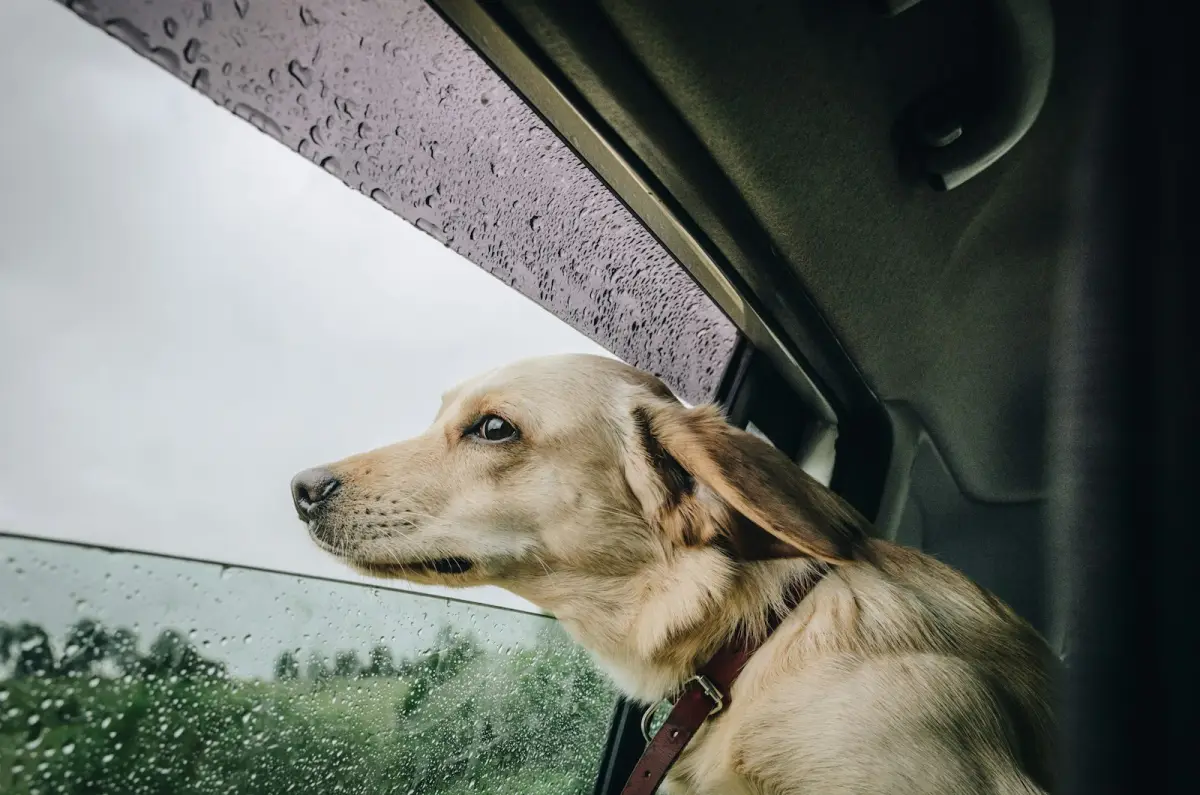
You open the car door. Your dog digs their feet in. Or they jump in and immediately start panting, drooling, whining, pacing. Maybe they vomit before you've left the driveway. Maybe they bark the entire ride. Maybe they sit in the footwell shaking for 45 minutes.
Car anxiety is one of the most common — and most ignored — behavioral issues we see in South Florida. Owners work around it. They stop taking the dog places. They only drive when absolutely necessary. The dog's world shrinks to the apartment and the block.
That's not a solution. Here's the actual fix.
Why Dogs Develop Car Anxiety
There are four main causes, and knowing which one your dog has determines the approach.
1. Motion Sickness (Physical)
Some dogs, especially puppies, get genuinely carsick. The vestibular system is underdeveloped, and the motion triggers nausea. Signs include drooling, lip-licking, yawning, vomiting, and refusal to eat before or after rides.
If this is the issue, the fix is partly medical (talk to your vet about meclizine or Cerenia) and partly exposure-based with short, frequent rides that end positively.
2. Negative Association (Learned)
The only time the dog gets in the car, they go to the vet. Or the groomer. Or the boarding facility. The car has become a predictor of unpleasant things.
Fix: change the association. The car leads to good things. Park, beach, a drive-through where the dog gets a plain patty, a friend's house. Dozens of positive destinations for every one unpleasant one.
3. Overstimulation and Arousal
The dog is fine physically, but the visual stimulation of moving traffic, passing dogs, and changing scenery pushes them into hyperarousal. They bark at everything out the window.
Fix: confinement reduces stimulation. A crate in the car covered with a sheet eliminates visual triggers. The dog rides in a den environment, not a panoramic viewing platform.
4. Lack of Exposure (Never Learned)
The dog was never exposed to car rides during the socialization window. The novel experience is overwhelming.
Fix: pure desensitization, starting from scratch.
The Vet Trip Special Case
For many dogs, the car anxiety is 90 percent about the destination, not the vehicle. If your dog only panics on the way to the vet, the protocol includes a parallel track: vet lobby desensitization.
Take the dog to the vet's office for "happy visits." Walk into the lobby, let them sniff around, feed them treats, talk to the receptionist for 2 minutes, and leave. No exam. No needles. No temperature check. Just a pleasant 5-minute visit that ends with the dog walking out the door.
Do this once a week for 4 to 6 weeks. The vet lobby transforms from a predictor of unpleasant things to a neutral (or even positive) environment. Combine this with the car desensitization protocol, and you break the chain at both ends — the ride is no longer scary, and the destination is no longer scary.
Most South Florida vet clinics are happy to accommodate this. Call ahead, let them know you're doing a socialization visit, and ask if there's a good low-traffic time to come in. Tuesday and Wednesday mornings are usually calm.
Client case: We worked with a 1-year-old German Shepherd named Luna whose anxiety spiked every car ride — panting, whining, pacing. 3 weeks of structured desensitization. Now rides calmly in her crate on the way to training and the beach.
The Desensitization Protocol
Regardless of cause, the rehabilitation follows the same general steps. Move to the next step only when the dog is calm at the current one.
Step 1: The parked car. Open the car door. Let the dog sniff. Feed them a high-value treat at the open door. Do this for 3 to 5 days, twice a day, 3 to 5 minutes each. Don't force the dog in.
Step 2: In the car, engine off. Lure the dog into the car with treats or feed their entire meal in the car. Door open. Engine off. Sit with them. 5 minutes. Then exit. Repeat for 3 to 5 days.
Step 3: In the car, engine on. Same drill, but start the engine. Don't move. The vibration and sound are new stimuli. Mark and reward calm behavior. 3 to 5 days.
Step 4: Short drives. Drive to the end of the block. Come back. Then around the block. Then 5 minutes. Then 10. Build incrementally. Every drive ends with something positive.
Step 5: Real destinations. Drive to the park. Drive to a friend's house. Drive to a pet store. The car now predicts good things.
The Crate Solution
For dogs with arousal-based car anxiety, the crate is the game-changer. A properly sized crate secured in the back seat with a cover turns the car into a den. The dog can't see the passing stimulation. They settle.
This works for motion-sick dogs too — the enclosed space reduces visual mismatch between what the eyes see and what the inner ear feels, which is a major contributor to nausea.
What Not to Do
Don't force the dog into the car physically. Don't sedate unless medically supervised. Don't comfort the anxious dog with a soft soothing voice because that reinforces the emotional state. Stay neutral with calm energy. Don't only drive to the vet — this is the single most common cause of car anxiety in adult dogs.
The Timeline
For mild car anxiety with whining and reluctance: 2 to 3 weeks of consistent desensitization. For moderate car anxiety with drooling, vomiting, and panic: 4 to 6 weeks. For severe car anxiety with complete refusal and extreme panic: 6 to 12 weeks, and you should be working with a professional. This is a case where our private sessions are the right fit.
Why It Matters in South Florida
In a city where everything worth doing is a 20-minute drive, a dog who can't ride in a car is a dog whose life is artificially small. And in a hurricane evacuation scenario, a dog who panics in the car is a dangerous liability. Car comfort is a life skill. Train it like one.
The Move
If your dog hates the car and you've been avoiding the issue, start the desensitization protocol this week. If the anxiety is severe, book a free assessment or text 786-755-5857 and we'll build a custom plan.
The South Florida Car Specifics
Car anxiety in Miami has a few unique wrinkles that don't exist in cooler climates:
Heat buildup. Even during the desensitization phase, never let the dog sit in a hot car. If you're doing "engine off" sessions during step 2, do them in the shade or in a garage. A car that's been sitting in the Miami sun for 20 minutes is an oven, and asking an already anxious dog to sit in a 130-degree car is cruelty, not training.
AC dependency. Once you start the engine and turn on the AC, the temperature change itself can be part of the positive association. Cool air equals car. Car equals comfortable. Let the AC be a reward.
Toll roads and bridges. If your dog's car anxiety was triggered by a specific route — the Rickenbacker Causeway, the 836 toll plaza, the bridges to Key Biscayne — avoid that route during early desensitization. Rebuild positive associations on familiar, calm roads first. Add the triggering route back only after the dog is reliably calm for 20-plus-minute drives.
Beach and park drives. Once you reach step 5 of the protocol, South Florida is your best asset. The dog learns that the car leads to Haulover Beach, to Amelia Earhart Park, to a new trail, to an adventure. The car becomes the start of something good, not the start of something scary.
Most dogs in South Florida can be fully car-comfortable within 4 to 6 weeks of consistent work. The investment pays off every time you need to go to the vet, the groomer, the beach, a friend's house, or — critically — an evacuation route during hurricane season.
Structure creates calm. Calm creates reliability. Even at 65 mph.
In Practice
My Lab had decided the car was the enemy. Drooling, panting, refusing to load. Vet visits were a wrestling match. Andre's fix was a desensitization protocol I could run in my own driveway — short stationary sessions, then engine on, then short trips. The piece I had been missing was consistency. I had to stop letting him win the battle every time. Two weeks in, he was loading on his own.
— Roberto, Coral Gables
Book a Free Assessment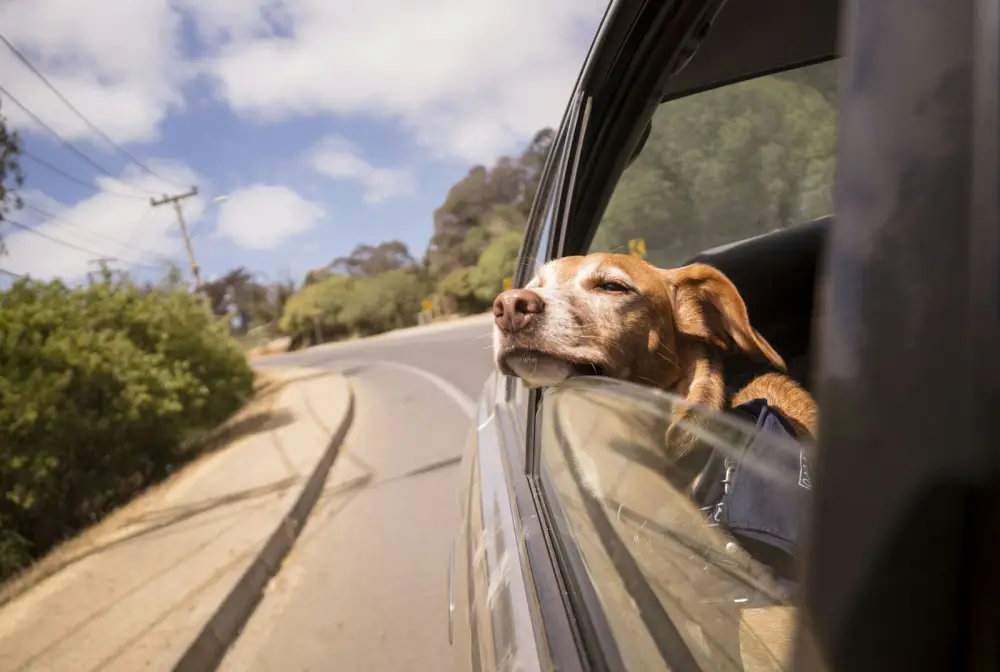
Ready to Get Started?
Book a free assessment to evaluate your dog's behavior, discuss your goals, and find the right program. No pressure — just honest answers from a working trainer.
Book Free AssessmentView All Programs
Unleash'd K9 | North Miami, FL | unleashdk9.com | 786-755-5857
Making Sit Happen.

