
Leash Reactivity in Brickell: Why Your Dog Loses It on Every Walk
Why Brickell Breaks Dogs
Brickell, Edgewater, Downtown Miami, the Roads — anywhere in Miami where the buildings are tall, the sidewalks are narrow, and the foot traffic is constant — produces leash-reactive dogs at an industrial rate. We see more reactivity cases from these neighborhoods than from anywhere else in South Florida.
It's not the dogs. It's the environment. And once you understand why, you understand how to fix it.
The Brickell Setup — A Reactivity Factory
Picture your typical Brickell walk. You leave a high-rise lobby. You step onto a sidewalk that's six feet wide. There are dogs every fifty feet — each one on a flexi-leash held by an owner staring at a phone. Trucks are unloading. Scooters are flying past. A doorman is ushering someone out of the next building. A delivery guy is jogging by with a hot pizza.
Your dog has no exit. No distance. No buffer. Every approaching dog is a forced face-to-face encounter at three feet. Every loud noise comes from a different direction. Every stranger looms over the dog in passing.
If you wanted to manufacture a reactive dog from scratch, you would design exactly this environment.
What Reactivity Actually Is
People hear the word "reactive" and assume "aggressive." Sometimes that's true. Most of the time, reactivity is anxiety masquerading as aggression. The dog is overwhelmed, has no exit, doesn't know how to handle the situation, and defaults to barking and lunging because that's the only tool they have.
The lunging works, in the dog's mind. The other dog passes. The stranger goes around. The threat moves on. The dog gets a hit of relief. The brain says: do that again next time.
After a few months of this, you have a fully conditioned reactivity response.
What Doesn't Work
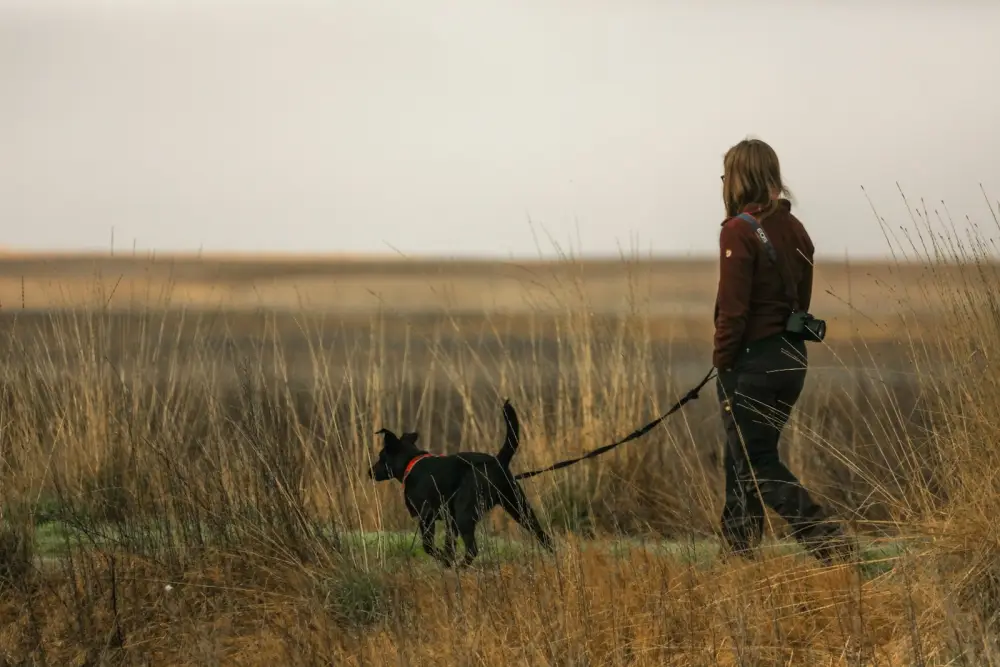
Let me save you some money and time. None of these will fix leash reactivity in Brickell:
- "Just give them a treat when another dog appears." Your dog is too far over threshold to take a treat. By the time they're calm enough to eat, the other dog has already passed. You haven't taught them anything.
- "Let them socialize at the dog park." Forcing an anxious dog into a chaotic dog park is like fixing claustrophobia by locking someone in a closet. You will make it worse.
- "Get a Gentle Leader / no-pull harness." Equipment that just restricts movement doesn't address the dog's emotional state. The dog is still reactive — they're just slightly less able to lunge. The underlying problem is untouched.
- "Yell at the dog when they bark." Now you have a reactive dog and a dog who associates other dogs with you getting angry. You've made the trigger worse.
- "Avoid other dogs." Avoidance is sometimes part of the rehab plan, but it can't be the whole plan — not if you live in Brickell. You'll be a prisoner in your own apartment.
Client case: We worked with a 3-year-old American Bully named Bruno in Brickell who pulled 130 lbs of muscle and lunged at every dog on the sidewalk. Proper leash pressure training plus prong collar conditioning. Bruno now walks like a gentleman past dogs on a loose leash — in the same building, same walks, same triggers.
The Unleash'd K9 Reactivity Protocol
Here is the actual fix.
Step 1 — Build a Foundation Off-Property
Before we do any reactivity work, we install the basic obedience and structure. Place command. Loose-leash walking in a neutral environment. Threshold control. A clear marker system. The dog needs to know what "yes," "no," and "free" mean before we ask them to use those skills around triggers.
This is where most owners try to skip ahead. They want to fix the lunging now. But you can't fix the lunging without giving the dog a different behavior to perform. The foundation is the alternative behavior.
Step 2 — Find the Threshold Distance
Every reactive dog has a distance at which they can see the trigger and still think clearly. For some dogs that's 50 feet. For some it's 150 feet. We find that distance and we work just inside it. We do not flood the dog. We do not push them over threshold to "prove" they can handle it. We work where they can succeed.
Step 3 — Pair the Trigger With Structure
The dog sees the other dog (at threshold distance). The dog holds their obedience — heel, sit, place, whatever the cued behavior is. The trigger passes. The dog gets marked and rewarded for the calm. We are not asking the dog to like the trigger. We are asking them to perform a known behavior in the presence of the trigger.
Reps. Hundreds of reps. Across many sessions. The dog learns: trigger appears → I have a job → I do the job → it's fine.
Step 4 — Close the Distance
Every successful session, we close the distance a little. From 100 feet to 80. From 80 to 60. From 60 to 40. We never push faster than the dog can handle. If we lose the structure, we go back to the previous distance and rebuild.
Step 5 — Move to Real Brickell Environments
Once the dog is reliable in controlled environments, we take them to actual Brickell sidewalks. Mary Brickell Village. Brickell City Centre. The Metromover stops. We replicate the exact conditions that broke them — but now with the structure and the off-switch in place.
Step 6 — Owner Transfer
Same drill as everything else. The dog is no longer reactive in our hands — but you have to be able to handle them. We spend dedicated time teaching you the body language, the leash mechanics, the timing, and the threshold management. If you can't replicate the work, the work doesn't last.
Why This Works When Other Methods Don't
Most reactivity protocols try to change how the dog feels about the trigger. We focus on changing what the dog does in the presence of the trigger. The feelings change as a side effect of repeated calm experiences.
It's the same reason structured exposure therapy works for human anxiety. You don't argue someone out of their fear of elevators. You take them on a controlled, gradual series of elevator rides until the fear has nothing left to feed on.

How Long It Takes
For a moderately reactive Brickell dog with a willing owner: 4–8 weeks of consistent work. That can be done as private sessions if you have the time and consistency, or compressed into our 4-week board and train if you don't.
For severely reactive dogs with a bite history, the timeline is longer and the protocol is stricter. We handle those cases too — but they require an in-person assessment first.
The Brickell-Specific Rules
If you live in Brickell, Edgewater, Downtown, or any high-density Miami neighborhood and you want to prevent reactivity (or rehab an existing case), here are the non-negotiables:
- Walk early or late. 6am and 9pm beat noon. Less traffic, fewer triggers, calmer reps.
- Use a six-foot leash, not a flexi. Flexis make threshold management impossible.
- Pre-walk decompression. Five minutes of structured engagement before you leave the apartment.
- Avoid the elevator stack. If your building elevator is full, wait. Forcing your dog into a packed elevator with strangers and other dogs is reactivity practice.
- Don't apologize. When your dog gets reactive, your voice and energy matter more than your words. Calm, neutral, redirect, move on.
The Move
If you live in Brickell and your dog is reactive on walks, book a free assessment or text 786-755-5857. Tell us where you walk, what triggers them, and what you've already tried. We'll build a plan that fits your dog and your block.
Brickell didn't have to break your dog. Now it doesn't have to keep them broken.
Structure creates calm. Calm creates reliability — even on a six-foot sidewalk.
Case in Point
Sofia came to us after eight months of avoiding the lobby at peak hours because her two-year-old rescue would explode at every dog within twenty feet. She had already worked with two trainers — one told her to ignore it, the other told her to feed treats every time another dog appeared. Both made it worse. In the first week we changed three things: the gear, the structure before walks, and the way she handled the elevator. Reactivity did not disappear overnight, but by week four she was walking the Brickell Key loop without rerouting. The behavior change tracked exactly with the structural change at home — the leash was always the symptom, never the problem.
— Sofia, Brickell
Book the 4-Week Board & Train
Ready to Get Started?
Book a free assessment to evaluate your dog's behavior, discuss your goals, and find the right program. No pressure — just honest answers from a working trainer.
Book Free AssessmentView All Programs
Unleash'd K9 | North Miami, FL | unleashdk9.com | 786-755-5857
Making Sit Happen.


