Mastiff Training: When 150 Pounds Says No

When 150 Pounds Says No
The Mastiff family — English Mastiff, Bullmastiff, Neapolitan Mastiff, Tibetan Mastiff, Spanish Mastiff — represents some of the largest, most powerful, most ancient guardian breeds in dog ownership. They are also some of the most challenging dogs to own correctly in a residential American context.
A Mastiff who has not been trained from puppyhood is not a "naughty dog." A Mastiff who has not been trained from puppyhood is a 150-pound force the family physically cannot control. There is no muscling a Mastiff into compliance. There is only the structure you built before the dog became uncontainable, or the absence of that structure.
In South Florida specifically, Mastiff ownership comes with additional climate and lifestyle challenges. Here's the honest guide.
The Mastiff Family
These breeds share common traits:
- Massive size (100 to 200+ pounds at maturity)
- Slow physical and behavioral maturation (3 to 4 years to full maturity)
- Calm, deliberate temperament when properly raised
- Strong guarding and territorial instinct
- Deep family bond with low tolerance for being alone
- Heat sensitivity (especially in Tibetan and Neo lines)
- Significant health considerations (hip dysplasia, bloat, heart issues, shorter lifespans)
Within the family, there's variation. The English Mastiff is the calmest and slowest. The Bullmastiff is more athletic and watchful. The Neo is the most extreme guardian. The Tibetan Mastiff is the most independent and stubborn. Match the specific breed to the lifestyle realistically.
The Size Reality
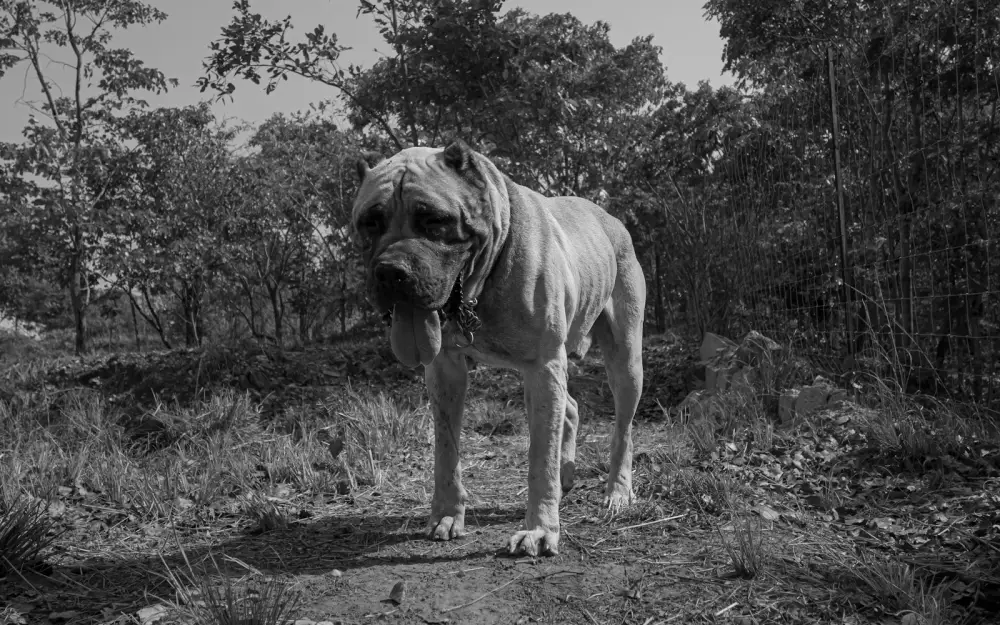
By 6 months, most Mastiffs are 70 to 100 pounds. By 12 months, 100 to 130. By full maturity (3 to 4 years), 130 to 200+. The growth curve is fast and unforgiving.
Every behavior issue you tolerate at 30 pounds becomes a serious problem at 100 pounds. A puppy who pulls is an annoyance. A 130-pound adult who pulls drags you off your feet on a Miami sidewalk. A puppy who jumps is funny. A 150-pound adult who jumps puts a child in the hospital.
The training has to be installed while the dog is still small enough for you to physically influence the outcome. By 8 months, that window is closing. By 12 months, it's closed for most owners.
The Foundation Priority List
For Mastiff puppies, the priorities have to be addressed in a specific order:
0 to 4 months: Crate training, name recognition, foundation handling tolerance, basic name-cue and sit. Do not skip the crate. A 150-pound dog you can't crate is a 150-pound dog you can't manage during vet visits, illness, travel, or guest situations.
4 to 6 months: Loose-leash walking, threshold control, place command introduction, structured impulse control. The leash work especially matters — every week you delay makes it harder.
6 to 9 months: Place command duration (build to 30+ minutes), recall foundation, basic obedience proofing, controlled socialization with people and dogs.
9 to 18 months: Adolescent reinforcement of every prior skill, real-world proofing in increasingly complex environments, owner-handled obedience under distraction.
18 months+: Maintenance, ongoing proofing, advanced skills as desired, lifelong structure.
If a Mastiff hits 12 months without the foundation skills installed, the family is now playing catch-up against 100+ pounds of dog. Some catch-up is possible. Most isn't easy.
Training the Mastiff
Calm, Deliberate Sessions
Mastiffs are not high-energy quick learners. They are calm, deliberate, methodical. Training sessions should be:
- 5 to 10 minutes maximum (especially for puppies and adolescents)
- Patient (the breed often takes longer to commit to a pattern than faster breeds)
- Reward-rich (the dog has to value the work to invest)
- Calm in delivery (high-energy training creates over-aroused Mastiffs, which is bad)
The breed responds beautifully to clear, calm, fair handling. They struggle with chaotic or harsh approaches.
Leash Work Is the Critical Skill
If you teach a Mastiff one thing, teach them to walk on a loose leash. The breed's strength means leash failure is the most dangerous training failure. We use prong collars on most adult Mastiffs because the communication clarity is essential — a 130-pound dog requires real feedback on the leash, not vague suggestions.
Get the foundation in by 5 months. Reinforce it weekly for life.
The Guarding Instinct
Every Mastiff has a guarding instinct. The question is whether it's managed or unmanaged. An unmanaged Mastiff guarding instinct produces a dog who barks at every doorbell, lunges at delivery drivers, intimidates visitors, and may eventually bite someone the dog perceives as a threat.
Managed properly, the same instinct produces a dog who is alert and watchful but defers to your judgment. The owner says the guest is welcome, the dog relaxes. The owner releases the dog from alertness with a verbal cue, the dog stands down.
This management requires the same socialization, obedience, and leadership discipline we covered in the Cane Corso guide. Read that section — the guarding-instinct framework applies directly to Mastiffs.
The South Florida Mastiff Reality
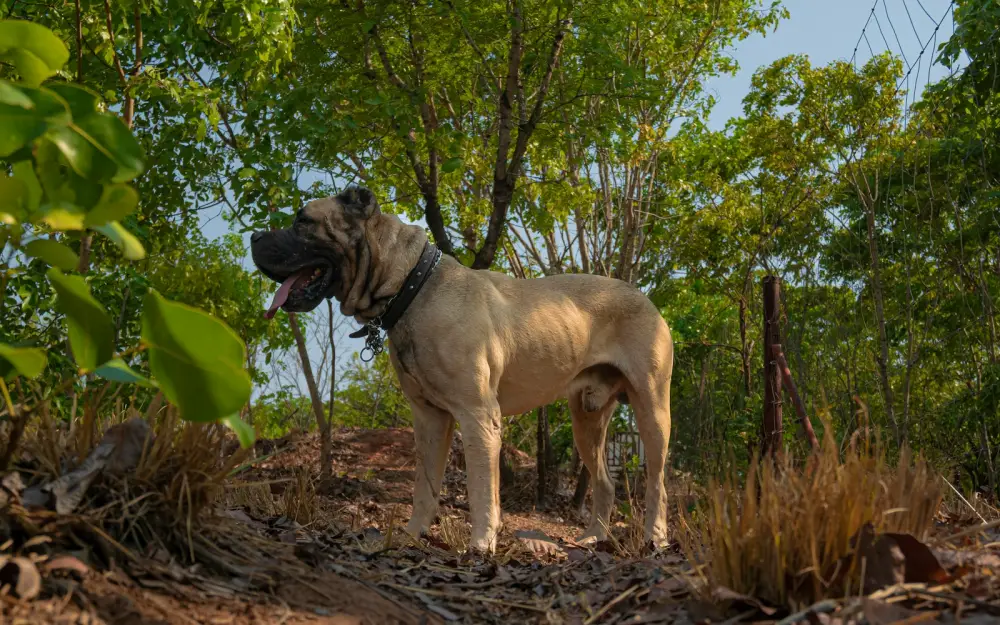
South Florida's climate is challenging for Mastiffs:
- Heat sensitivity is severe in most Mastiff breeds
- The thick coat (especially Neapolitan and Tibetan) compounds heat stress
- Brachycephalic tendencies in some lines (English, Neo) compromise breathing in heat
- Joint issues from breed-typical hip dysplasia worsen in humid climates
- Indoor-dominant lifestyle in summer (May through October)
- AC at all times during the day
- Outdoor exercise pre-7 AM and post-8 PM only
- Cooling mats, elevated cots, fans for indoor rest
- Pool time as exercise replacement (if the dog tolerates water)
- Vigilant heat exhaustion monitoring
A Mastiff who gets heat stroke in Miami can have permanent organ damage or die within 30 minutes. The protocol is not optional.
The Liability and Insurance Reality
Mastiffs are large, powerful guardian breeds. Insurance companies often refuse homeowners policies for Mastiff owners, require liability riders, charge premiums for large guardian breeds, or drop coverage after any reported incident.
Verify your insurance situation before getting a Mastiff. Some breeds (English Mastiff) are typically easier to insure than others (Neapolitan, Tibetan). The cost of a liability incident with an untrained Mastiff is potentially seven figures. The cost of professional training is a few thousand. The math is obvious.
The Common Mastiff Cases
What we see most often at Unleash'd K9:
- Adolescent Mastiffs (8 to 18 months) whose families have lost physical control
- Resource guarding emerging around food, sleeping spots, or family members
- Door dashing — extremely dangerous in a breed this size
- Reactivity to strangers from inadequate socialization
- Dogs who can't be safely walked because of pulling and lunging
- Multi-dog households where the Mastiff has become the dominant force without owner leadership
- Health-affected dogs whose joint issues now make basic obedience harder
For Mastiff puppies under 6 months, private sessions starting immediately are the right call — preventive structural work before the size makes everything harder.
The Honest Mastiff Question for Miami
Before getting a Mastiff in South Florida: are you prepared for an indoor-dominant dog half the year, can you commit to professional training from 8 weeks onward, do you have the home space and the financial resources for a giant breed, and are you ready for a relatively short-lived breed (8 to 10 years for most Mastiffs)?
If yes, the Mastiff family produces some of the most rewarding, devoted companion dogs you can own. If no, choose a breed better matched to the climate, the lifestyle, and the heart-cost of short-lived giants.
The Move
If you own a Mastiff in South Florida and you're losing physical control of the dog — or you're seeing early warning signs of adolescent issues — do not wait. The breed gives you a narrow window to install the structure before size makes correction nearly impossible.
Book a free assessment or text 786-755-5857. We work with Mastiffs and giant breeds regularly. We'll evaluate the dog and the family honestly and tell you exactly what's needed and how urgent the timeline is.
Structure creates calm. Calm creates reliability. With 150 pounds of guardian dog, reliability isn't a feature. It's the only path.
Ready to Get Started?
Book a free assessment to evaluate your dog's behavior, discuss your goals, and find the right program. No pressure — just honest answers from a working trainer.
Book Free AssessmentView All Programs
Unleash'd K9 | North Miami, FL | unleashdk9.com | 786-755-5857
Making Sit Happen.