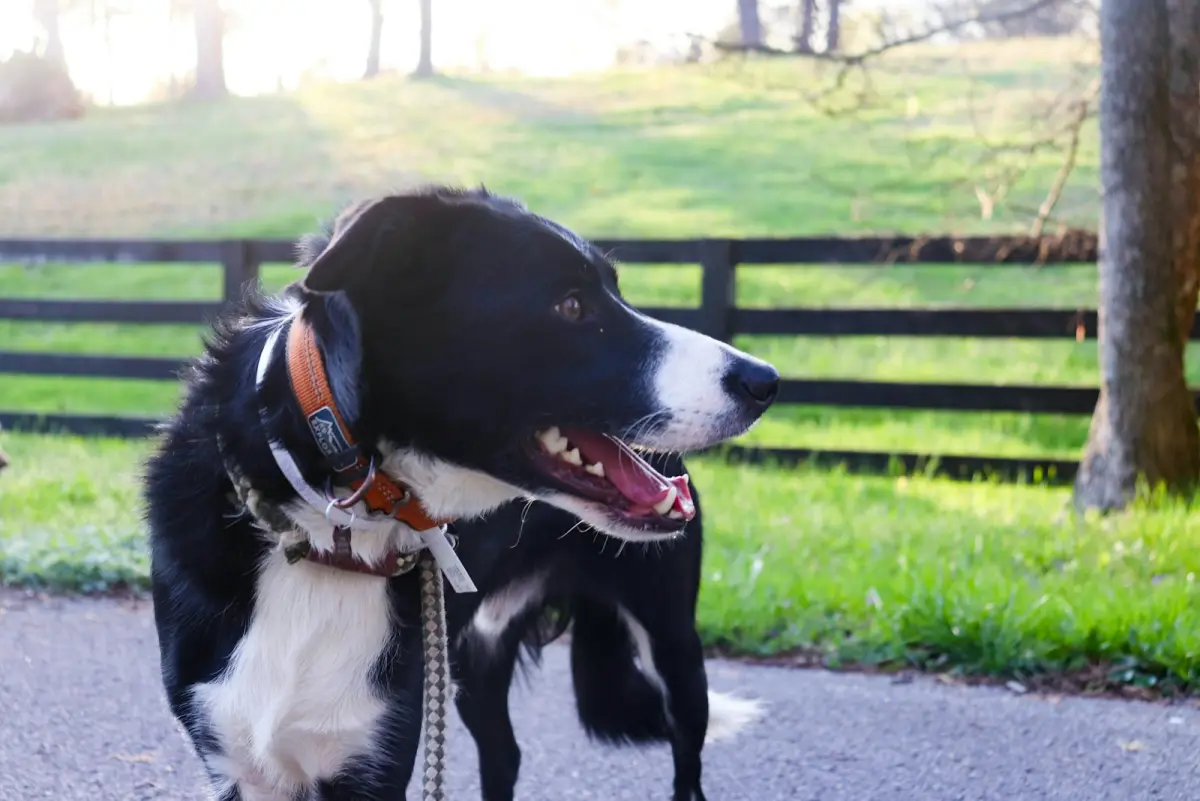
Prong Collar vs. E-Collar vs. Flat Collar: A Trainer's Honest Breakdown
The Collar Wars — Settled
Every dog training forum on the internet has the same argument playing on loop: prong collars are cruel. E-collars are abusive. Flat collars are the only humane option. The arguments are emotional, rarely informed, and almost never consider the actual dog in front of you.
Here's the honest breakdown from a balanced trainer who uses all three tools, has seen all three tools misused, and makes decisions based on the dog — not the ideology.
What Each Collar Is
The Flat Collar
A flat nylon or leather collar that buckles or clips around the dog's neck. This is what most dogs wear as their everyday collar, and it's what most people assume is the "right" training tool.
Pros: Simple. Familiar. Fine for dogs who already walk well. Holds ID tags. No learning curve.
Cons: Provides almost zero communication on the leash. A dog who pulls on a flat collar is just getting pressure on the trachea with no directional information. For dogs who pull hard, a flat collar can actually cause tracheal damage, collapsed trachea, or neck injury over time — which is ironic given that it's marketed as the "safe" option.
Best for: Dogs who are already leash-trained and don't pull. Dogs wearing an ID collar for daily life (not training). Low-drive, soft-temperament dogs who respond to minimal leash pressure.
The Prong Collar (Herm Sprenger Style)
A collar made of interlocking metal links with blunted prong tips that sit evenly around the dog's neck. When the leash tightens, the prongs apply even pressure around the circumference of the neck, then release when the leash is slack.
Pros: Distributes pressure evenly (unlike a flat collar, which concentrates all pressure on the trachea). Provides clear, immediate feedback — the dog knows exactly when they're pulling and exactly when they're not. Self-correcting — the dog learns to avoid the pressure by keeping the leash loose. Effective for strong pullers, large breeds, and dogs who don't respond to flat-collar communication.
Cons: Looks intimidating. Requires proper fitting (must sit high on the neck, snug, with no extra links). Can be misused if jerked harshly, fitted improperly, or left on 24/7. Not appropriate for dogs with neck injuries, skin sensitivity, or extreme fear responses.
Best for: Strong pullers. Dogs over 40 pounds who have blown through flat collars and harnesses. Leash training foundation work. Dogs who need clear mechanical feedback to understand leash pressure.
The E-Collar (Remote Collar)
A collar with a receiver box that delivers a low-level electrical stimulation controlled by a handheld remote. Modern e-collars (Mini Educator, Dogtra) have 1 to 100 levels, and the working level for most dogs is barely perceptible to the human hand — a muscle-stimulation sensation, not a shock.
Pros: Communication at distance. The only tool that allows you to reinforce commands when the dog is 50 or 100 feet away. Essential for off-leash reliability, recall work, and proofing in open environments. Provides consistent, repeatable stimulation that the dog can clearly understand.
Cons: Requires proper conditioning and introduction. Cannot be used as a shortcut — the dog must first understand the command before the e-collar is used to reinforce it. Misuse (too high a level, improper timing, using it as punishment instead of communication) creates fear, confusion, and fallout. Not appropriate for puppies under 5 to 6 months or dogs with severe anxiety disorders.
Best for: Off-leash training. Recall proofing in real-world environments. Distance obedience. Dogs who are well past the foundation phase and need reliable performance in high-distraction settings.
The Decision Framework
The right collar depends on three things:
1. What Is the Training Goal?
If the goal is basic leash manners for a small, soft-temperament dog, a flat collar may be enough. If the goal is leash training a 90-pound Rottweiler who pulls like a freight train, the prong collar is the right tool. If the goal is off-leash reliability at a Miami beach, the e-collar is the tool that gets you there.
2. Where Is the Dog in Their Training?
Foundation phase (learning new commands): Prong collar or flat collar for leash work. No e-collar yet — the dog doesn't know what they're being corrected for.
Proofing phase (testing known commands under distraction): E-collar introduction. The dog knows the commands. The e-collar reinforces compliance at distance and under pressure.
Maintenance phase (ongoing daily life): Whatever tool maintains the structure. For most dogs, this eventually means a flat collar for routine walks and the e-collar for off-leash work.
3. What Is the Dog's Temperament?
Soft, sensitive dogs (many Dobermans, Poodles, Vizslas): Lower-level tools. A properly fitted prong on the lightest setting, or an e-collar at working levels so low the human can barely feel it. These dogs respond to minimal input.
Hard, driven dogs (Malinois, some bully breeds, high-drive working dogs): Higher threshold for communication. May need a prong collar for leash work and an e-collar at moderate levels for distance work. These dogs are not harmed by fair corrections — they need clear communication to cut through high arousal.
Fearful or anxious dogs: Proceed with extreme caution. Improper tool use on a fearful dog can create lasting fallout. Professional guidance is essential.

What I Use at Unleash'd K9
Every dog who enters our board and train program gets evaluated individually. There is no one-size-fits-all collar. The tool selection is based on the dog's size, temperament, training goal, and current skill level.
The typical progression for a board and train dog:
- Week 1: Flat collar or slip lead for initial assessment and marker training
- Week 2: Prong collar introduction for structured leash work and mechanical communication
- Week 3: E-collar conditioning and introduction for distance work and proofing
- Week 4: All tools in rotation based on the environment and the task
For private session clients, I evaluate the dog in the first session and recommend the appropriate tool. I teach proper fit, proper use, and proper timing. The tool is never the first thing we talk about — the foundation skills come first.
The Misuse Problem
Every tool can be misused. A flat collar on a strong puller causes tracheal damage. A prong collar yanked in anger causes pain and fear. An e-collar cranked to maximum as punishment creates a fearful, shutdown dog.
The tool is not the problem. The handler is the problem. A prong collar in skilled hands is a communication device. An e-collar in skilled hands is a remote conversation. Both tools in unskilled hands are weapons.
This is why professional guidance matters. If you're going to use a prong or e-collar, get trained by someone who knows how to use them properly. A single private session focused on tool introduction can save you months of mistakes.
The Move
Don't choose a collar based on what the internet tells you is "humane" or "cruel." Choose based on your dog, your goals, and what produces the best communication between you and the animal in front of you.
Book a free assessment or text 786-755-5857 and we'll help you pick the right tool for your dog and teach you how to use it correctly.
Structure creates calm. Calm creates reliability. The right tool, used right, is what makes both possible.

Ready to Get Started?
Book a free assessment to evaluate your dog's behavior, discuss your goals, and find the right program. No pressure — just honest answers from a working trainer.
Book Free AssessmentView All Programs
Unleash'd K9 | North Miami, FL | unleashdk9.com | 786-755-5857
Making Sit Happen.


