Puppy Training in Miami: The First 90 Days That Decide Everything
The 90 Days Most Owners Sleep Through
You bring an 8-week-old puppy home in Miami. The breeder hands you a folder, the vet hands you a vaccine schedule, your friends send you toys. Almost no one tells you the most important thing: the next 90 days will determine the dog you live with for the next 12–15 years.
That's not motivational copy. That's developmental neurology. The window between roughly 8 weeks and 16 weeks is when a puppy's brain is most receptive to learning what's safe, what's normal, what's expected, and what kind of dog they're going to be. After 16 weeks, that window starts closing. By 6 months, it's shut.
Here is the exact roadmap we give every new puppy client at Unleash'd K9.
Days 1–7: Decompression and Routine
Don't train. Don't socialize. Don't invite the whole family over.
Your puppy just left the only environment they've ever known. They are exhausted, overstimulated, and processing more change in a week than they will the rest of the year. The job in week one is to let them sleep and learn the rhythm of their new home.
What you do teach in week one:
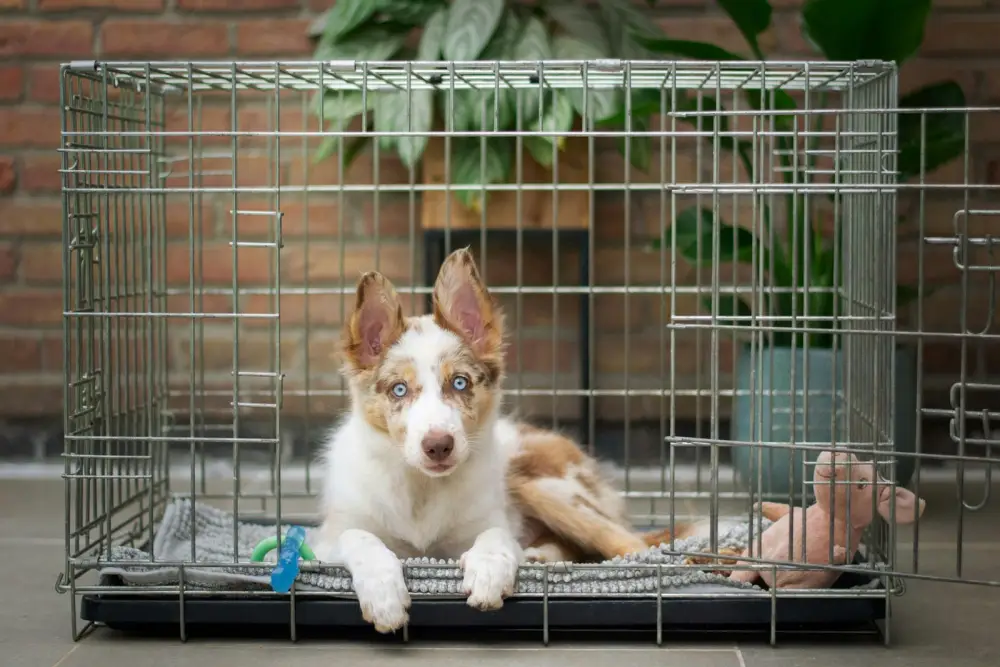
- Crate is the safe place (fed in the crate, naps in the crate, never punished into the crate)
- Outside is for potty (carry the puppy out, don't let them rehearse mistakes)
- Sleep is mandatory (puppies need 18–20 hours of sleep a day; most "behavior problems" are sleep deprivation)
- A loose handling routine — touching feet, ears, mouth, gently and briefly
That's it. Week one is a recovery week.
Days 7–30: Foundation and Imprinting
Now we start. This is the imprinting window — whatever the puppy experiences calmly during this stretch becomes "normal" for life.
Daily Exposures
Pick three new things every day. A new surface (tile, grass, sand, metal grate, wood). A new sound (vacuum, blender, traffic, thunder app). A new sight (someone in a hat, a wheelchair, a person on a scooter, a stroller). The puppy doesn't have to interact — they just have to observe calmly. That's the lesson.
In Miami, this is easy. Take the puppy in a sling or stroller (not on the ground until vaccinations are complete) to Brickell, to Lincoln Road, to the Wynwood walls, to the Coconut Grove waterfront. Let them watch the world from your arms.
Crate Training
Crate-train hard in this window or pay for it forever. The crate is a non-negotiable life skill in Miami — for vet visits, hurricane evacuations, hotels, travel, and giving you a sane life at home.
Build a positive association: feed all meals in the crate, give chews in the crate, naps in the crate. Never use it as punishment. By day 30, your puppy should be sleeping the night through in the crate without protest.
Potty Training
Take the puppy out every 90 minutes during the day, immediately after eating, after every nap, and after every play session. Carry them to the potty spot. Mark and reward when they go. Never punish accidents — clean and move on. Most puppies are reliably housebroken by 14–16 weeks if you do this consistently.
Light Obedience
Start teaching name recognition, sit, hand targeting, and a baby recall. Three short sessions a day, two minutes each. Don't drill. Don't get frustrated. Make it fun and end on a win.

Days 30–60: Structure and Socialization
Now the puppy is settled. They know the rules of the house, they sleep through the night, they're food-motivated and ready to work. This is where serious imprinting happens.
The Real Definition of Socialization
Socialization does not mean "let your puppy meet every dog and every person you see." That's the fastest way to create a reactive adult dog. Socialization means calm, neutral exposure to a wide variety of stimuli without forced interaction.
Goals for this stretch:
- 100+ different people seen (not necessarily touched) — different ages, races, heights, hats, uniforms
- 50+ different surfaces walked on
- 30+ different sounds processed
- 20+ different environments visited
- A small number — maybe 5–10 — of carefully chosen, well-vaccinated, friendly adult dogs introduced one-on-one in calm, controlled settings
Notice the word "calm" everywhere. The lesson isn't "dogs are fun to wrestle with." The lesson is "the world is normal and you don't have to react to it."
Build the Off-Switch
In a Miami apartment, the off-switch matters more than the on-switch. Practice short bursts of structured engagement followed by calm settling on a place bed. The puppy learns: when you're working, you're working. When you're not, you're calm. Two states, no in-between.
Days 60–90: Generalization and Real Life
Now we take everything on the road. The puppy comes with you to Home Depot, to outdoor cafés, to friends' houses, to the boardwalk. They practice their obedience in those environments. They learn that "sit" means sit whether we're in the kitchen or in front of a busy Lincoln Road bar.
This is also the right time to start the Puppy Jumpstart program at Unleash'd K9 if you want professional eyes on the foundation. We catch the small things now that become big things at 8 months.
The 16-Week Cliff
Around 14–16 weeks, most puppies hit a developmental fear period. Things they accepted last week now scare them. This is normal. Don't push, don't coddle, don't make a big deal of it. Let them observe at a distance, mark calm behavior, and move on. The fear period passes in 1–2 weeks.
Client case: We worked with a 6-month-old Goldendoodle named Coco who was biting, jumping, and had zero structure. Puppy Jumpstart program — 2 in-home sessions. Owner now runs the daily schedule from our guide. Coco sleeps through the night in her crate.
What Happens If You Skip This
The puppy you didn't socialize at 10 weeks is the 10-month-old dog reacting to every passing dog on Las Olas. The puppy you didn't crate-train is the 1-year-old destroying your apartment when you leave for work. The puppy you didn't structure is the 18-month-old you're now thinking about rehoming.
Almost every adult dog problem we fix at Unleash'd K9 was preventable with 90 days of focused work between weeks 8 and 16. We can still fix it later — that's why we have a board and train program — but it takes longer and costs more.
Do the work now and you'll never need us for anything beyond a tune-up session.
The Most Common Miami Puppy Mistakes I See
After thousands of puppy consults in South Florida, the same five mistakes come up over and over:
1. Treating the puppy like a baby instead of a dog. Carrying them everywhere, never enforcing rules, redirecting every behavior with treats. This produces a pampered adult dog with no impulse control and no ability to handle frustration.
2. Skipping the crate "because the puppy cries." Of course they cry. Crying is not a vote against the crate — it's the puppy testing whether the crate is real. Hold the line for 4–7 nights. The crying stops. The dog is set up for life.
3. Letting the puppy meet every dog at the park "to socialize." This is not socialization, it is reactivity practice. The lesson the puppy is actually learning is every dog I see is for me to engage with — and that creates the leash-frustrated adult dog you'll be paying me to fix at 14 months.
4. Buying gear that doesn't fit the goal. A retractable leash teaches pulling. A harness with no front clip removes your ability to communicate through the leash. A flat collar on a 5-month-old who already pulls hard is asking for a lifetime of leash wars.
5. Waiting until 6 months to start "real" training. By then, the bad habits are baked in. Start at 8 weeks. Light, fun, structured. The window does not wait for you.
The Move
If you have a puppy in South Florida and you want a structured plan from day one, book a free assessment or text 786-755-5857. We'll set you up with a clear roadmap, the right tools, and the right expectations.
90 days. That's what you have. Don't waste them.
Structure creates calm. Calm creates reliability.
In Practice
The Hernandez family brought us their fourteen-week-old puppy after two months of biting hands, ignoring crate time, and using the living room rug as a bathroom. They were first-time dog owners and had been told by friends to "let her be a puppy." We installed a feeding-and-rest schedule, a crate routine, and three non-negotiable household rules in the first session. The owners did the work between visits — that part is on them, not us. By the time the puppy hit six months, the household ran on a rhythm. The puppy did not get easier. The owners got clearer.
— The Hernandez Family, Coral Gables
Book Puppy JumpstartReady to Get Started?
Book a free assessment to evaluate your dog's behavior, discuss your goals, and find the right program. No pressure — just honest answers from a working trainer.
Book Free AssessmentView All Programs
Unleash'd K9 | North Miami, FL | unleashdk9.com | 786-755-5857
Making Sit Happen.