Rottweiler Training: Structure, Leadership, and Real Obedience
The Breed That Demands Respect
The Rottweiler is one of the most capable, intelligent, and loyal breeds alive. It's also one of the most commonly failed by owners who underestimate what the breed actually needs. In South Florida, we see Rottweilers in our programs every month — and the pattern is always the same. Great dog. Under-structured home. Predictable problems.
Here's how to train a Rottweiler the right way.
Understanding the Rottweiler
The Rottweiler was bred to drive cattle and pull carts. They are working dogs with a strong body, a strong mind, and a strong will. They are not aggressive by nature — despite the reputation. They are confident, watchful, and territorial. Those are normal breed traits, not behavior problems.
The problems start when those traits exist without leadership. A Rottweiler without a clear leader doesn't become passive. They become the leader. And a 100-pound dog who's decided they're in charge of the household is a dangerous situation — not because the dog is bad, but because no one taught them the rules.
The Three Pillars of Rottweiler Training
Structure
Rottweilers thrive on routine and rules. They need to know when they eat, when they train, when they rest, and what's expected of them in every context. Free-roaming the house all day with no schedule produces boredom, anxiety, and destructive behavior.
The daily structure should include scheduled meals fed in the crate, 2 to 3 structured exercise and training blocks, mandatory crate rest periods, and consistent thresholds at every doorway.
Leadership
Leadership with a Rottweiler is not about dominance or intimidation. It's about clarity and consistency. The dog needs to know that you make the decisions — when to eat, where to go, who's allowed inside, when to play, when to stop. Every decision you make clearly and consistently reinforces your leadership. Every decision you waffle on undermines it.
The most common leadership failure we see: the owner lets the Rottweiler on the couch, in the bed, through every door first, and eating whenever they want — then gets surprised when the dog resource guards the couch or won't recall from the yard. The dog was never given a reason to respect the owner's authority, so they don't.
Socialization
Same urgency as any guardian breed. The Rottweiler's baseline is watchful and territorial. Without thorough socialization during the 8 to 16 week window, that baseline becomes reactive and fearful. Expose the puppy to everything — people, dogs, environments, sounds, surfaces — calmly and systematically.
Obedience Foundation
The Rottweiler is a pleasure to train when the handler is clear and fair. They learn fast, they work with intensity, and they enjoy the partnership. The foundation skills are the same as every program we run: sit, down, place, heel, recall, threshold control, and impulse control.
Two Rottweiler-specific notes on obedience:
Heel work is critical. A Rottweiler who doesn't heel is dragging you down the sidewalk. The breed is strong enough to pull most adults off their feet. Structured heel position — dog at your left side, shoulder aligned with your knee, no pulling — should be trained from puppyhood and maintained for life.
Place command saves lives (and couches). A Rottweiler on a place bed is a Rottweiler who's not guarding the front door, not blocking the hallway, not claiming the couch, and not making independent decisions about who enters the house. Place is the most important command for this breed, full stop.
Exercise Requirements
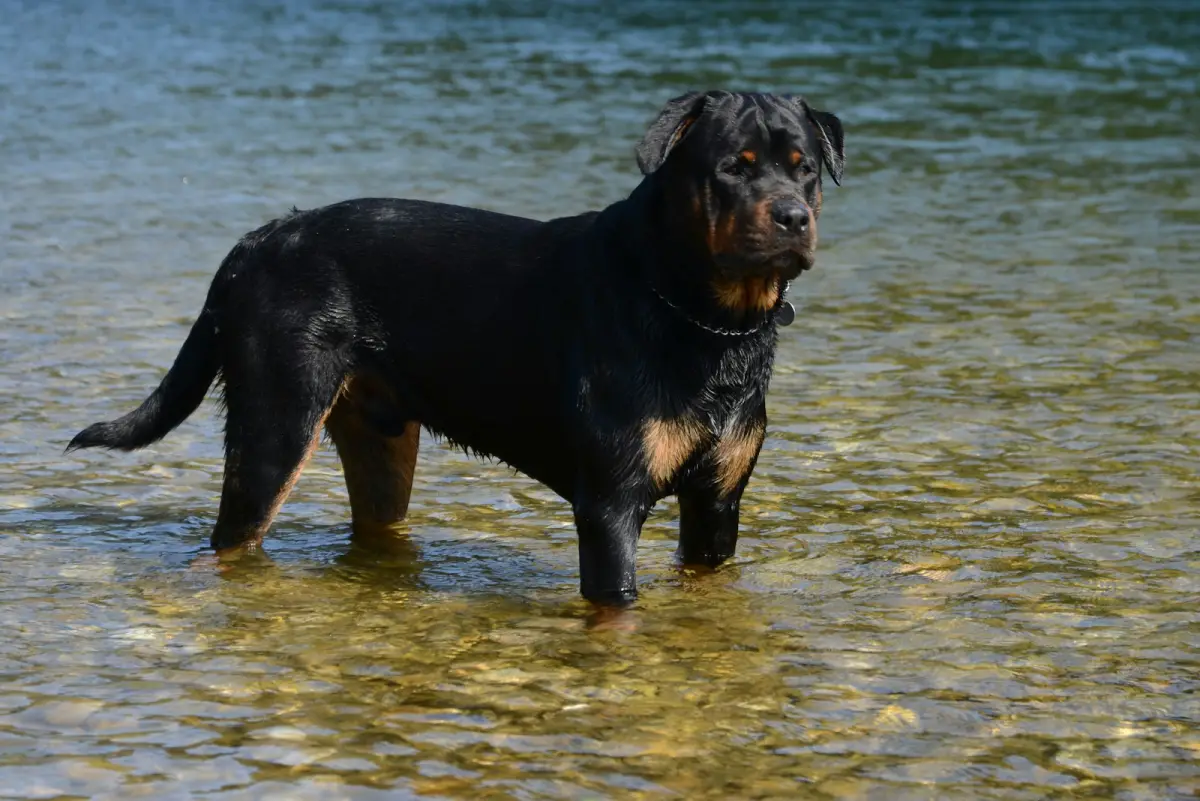
Rottweilers need moderate to high exercise — roughly 60 to 90 minutes of structured activity per day. This includes leash walks with heel work, swimming (the breed often loves water), controlled fetch with obedience breaks, and structured play sessions. In South Florida, all outdoor exercise should happen before 8 AM or after 7 PM during summer months. The breed's black coat absorbs heat aggressively.
Mental exercise matters as much as physical. Puzzle feeders, scent work, obedience sessions, and structured training games all contribute to a tired, settled Rottweiler at the end of the day.
The Guarding Instinct
Like the Cane Corso, the Rottweiler has a natural guarding instinct that must be managed, not encouraged. Do not hire a "protection trainer" to sharpen your pet Rottweiler's aggression. You are lighting a match next to a gas tank. The breed already has the instinct. Your job is to manage it through socialization, obedience, and leadership so the dog defers to your judgment about threats.
If the Rottweiler is barking at every person who walks past the house, lunging at strangers on walks, or resource guarding family members, those are signs that the guarding instinct is unmanaged and professional intervention is needed now, not later.
Common Rottweiler Behavior Issues in Miami
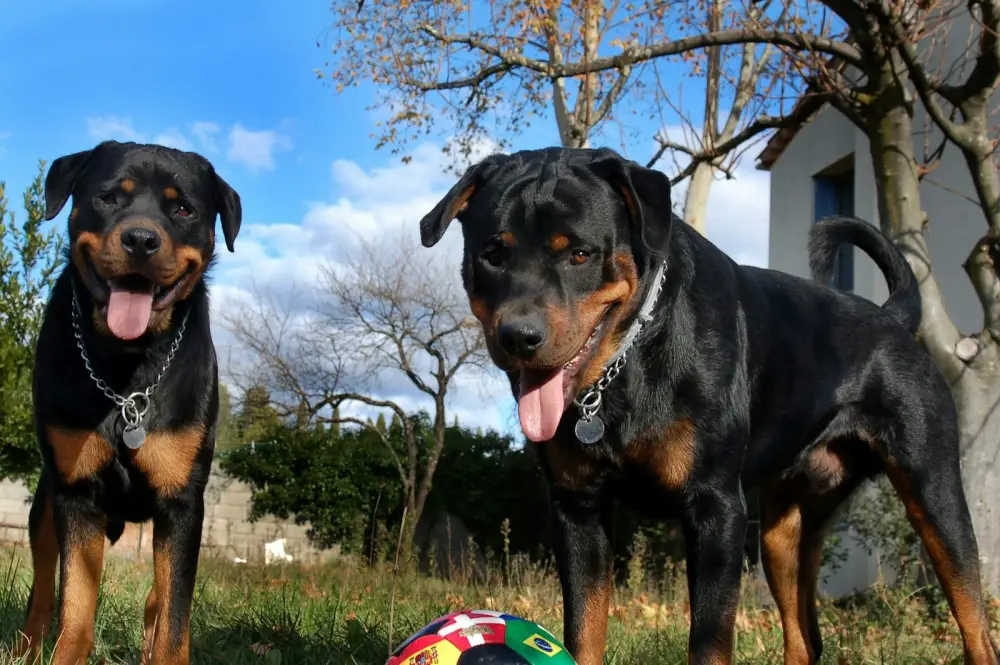
The cases we see most often at Unleash'd K9:
Leash reactivity. Usually caused by undersocialization plus the breed's natural suspicion of strangers. Fixable with structured exposure work over 6 to 12 weeks.
Resource guarding. Food, toys, sleeping spots, and people. The breed is possessive by nature. Without the impulse control framework and structured resource access we teach, guarding escalates.
Separation anxiety. Rottweilers bond deeply. Some develop genuine distress when left alone. Crate training and a structured departure protocol are the fix.
Jumping and mouthing. Usually an adolescent issue (8 to 18 months). The puppy who playfully jumped at 30 pounds is now a 90-pound wrecking ball. Place command and impulse control address this quickly if caught early.
The Training Program
For Rottweiler puppies under 6 months, private sessions starting early are ideal. The owner learns to handle the dog properly while the puppy is still manageable size, and the foundation is built with the owner present.
For adolescent and adult Rottweilers with existing behavior issues, the board and train provides the immersive reset. The structure is installed without the home environment's inconsistencies, and the owner receives transfer sessions to maintain everything we build.
For maintenance, the Alumni program provides monthly tune-ups that keep the training sharp and give the owner ongoing professional support.
The Move
The Rottweiler is one of the best breeds in the world when raised with structure, leadership, and socialization. They are also one of the most dangerous when raised without those things. The difference is not genetics. The difference is the owner.
If you own a Rottweiler in South Florida and you want to build the calm, confident, reliable dog this breed is capable of being, book a free assessment or text 786-755-5857. We'll show you exactly where to start.
The Adolescent Rottweiler (8 to 18 Months)
This is the phase that breaks most Rottweiler owners. The puppy who was sweet, compliant, and easy to manage at 4 months becomes a 70-pound bulldozer at 10 months who tests every boundary, ignores commands they knew perfectly, and pushes back on corrections they used to accept without issue.
This is normal. Adolescence in Rottweilers is hormonally driven and developmentally predictable. The dog is figuring out where they sit in the hierarchy, and they do that by testing the structure you've built.
The fix is simple and brutally hard: hold the line. Don't change the rules. Don't escalate your corrections out of frustration. Don't reduce expectations because the dog is "going through a phase." Maintain the same structure, the same commands, the same thresholds, the same consequences. The adolescent period passes in 2 to 4 months if the structure holds. It lasts years if the owner caves.
The owners who hold steady through Rottweiler adolescence come out the other side with the most loyal, stable, obedient dog they've ever owned. The owners who cave come out the other side calling a trainer in a panic with a 100-pound dog who runs the house.
If you're in the thick of it right now, hang in there — and book an assessment if you need backup. We'll help you hold the structure.
Structure creates calm. Calm creates reliability. A reliable Rottweiler is the best dog you'll ever own.
Real Results
I bought my Rottweiler knowing the stares I would get on Lincoln Road. By eighteen months he was pulling me, lunging at scooters, and reinforcing every assumption people had about the breed. I had been so focused on managing perception that I had stopped training the dog. Andre's first session was blunt — I had to stop apologizing for owning the breed and start training the dog the breed deserved. Structure, real obedience, place command at the apartment door, a heel I could hold through Ocean Drive. Eight weeks later, the looks changed. The dog had become an ambassador instead of a stereotype.
— Wendy, Miami Beach
See the Board & Train ProgramReady to Get Started?
Book a free assessment to evaluate your dog's behavior, discuss your goals, and find the right program. No pressure — just honest answers from a working trainer.
Book Free AssessmentView All Programs
Unleash'd K9 | North Miami, FL | unleashdk9.com | 786-755-5857
Making Sit Happen.