Counter Surfing, Trash Raiding, and Stealing Food: The Impulse Control Fix
The Dog Isn't Being Bad — They're Being a Dog
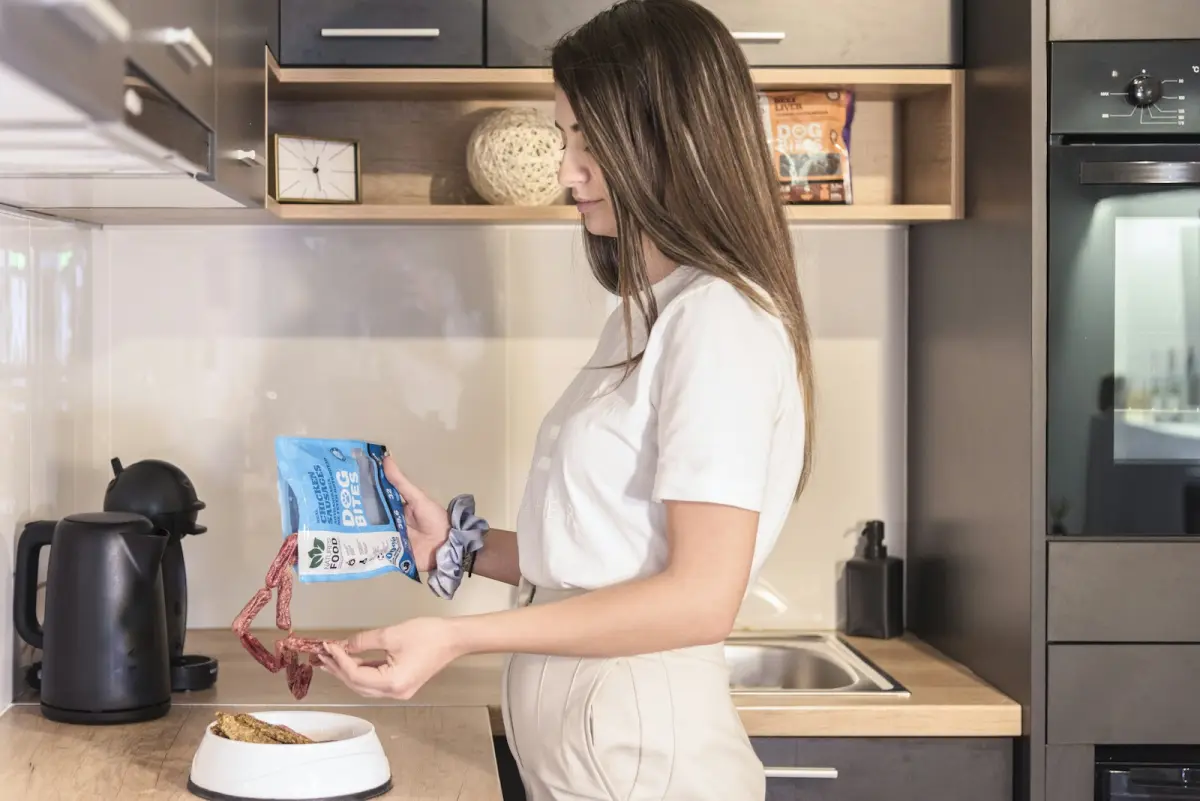
You leave a steak on the counter. You turn around for three seconds. The steak is gone and the dog is licking their face in the next room.
You blame the dog. The dog has no idea what they did wrong. In the dog's mind, food was available and unguarded — so they took it. That's not disobedience. That's perfectly logical canine behavior. Dogs are opportunistic scavengers by biology.
Counter surfing, trash raiding, and food theft are not naughty dog problems. They are impulse control failures. Fix the impulse control, and every surface in your kitchen becomes safe.
Why "No" Doesn't Work
Yelling no at a dog who just counter-surfed teaches the dog one thing: don't do it when the human is watching. The dog doesn't generalize no to mean never take food off the counter. They generalize it to mean don't take food off the counter when the human is in the room and making that angry sound.
Leave the room, and the counter is open season again. The fix has to work when you're not in the room. That means you need to install a mindset, not a reaction.
Client case: Juno, a Standard Poodle in Aventura, pulled a whole rotisserie chicken off her owner's counter the night they had guests over. 4 weeks of private sessions on impulse control. Now she holds a down-stay in the living room while her owner plates charcuterie six feet away — doesn't break eye contact with the owner for a release word.
The Impulse Control System
At Unleash'd K9, we fix counter surfing and food theft by building a global impulse control framework. The counter is just one application. The same framework fixes door dashing, jumping on guests, lunging at dogs on leash, and every other impulse-driven behavior.
Level 1 — Food Bowl Impulse Control
The dog learns that food is visible, food is desirable, and they don't touch it until released. Start with the food bowl. Hold the bowl. The dog sits. You lower the bowl toward the floor. If the dog breaks the sit, the bowl goes back up. Repeat until the dog holds the sit while the bowl is on the floor. Then release with a clear marker: "Free." This takes 3 to 5 days for most dogs.
Level 2 — Leave It on the Floor
Place a treat on the floor. Cover it with your hand if needed. The dog sits and waits. They look at you, not the food. You mark the eye contact: "Yes." You reward with a different treat from your hand, not the floor treat. Then release.
The lesson: leaving the food alone is more rewarding than taking the food. Build from one treat on the floor to multiple treats, to high-value items, to items at increasing distances.
Level 3 — Counter-Height Exposure
Bring the food up to counter height. Place food on a low table or chair. The dog is in a down-stay nearby. If the dog breaks for the food: neutral no, redirect back to the down-stay, reset. No anger. Just that choice doesn't work, try again.
Level 4 — Real Kitchen, Real Food
Put food on the actual kitchen counter. The dog is on their place bed within line-of-sight of the kitchen. The dog holds place while food sits on the counter. You walk away. You come back. The food is untouched. Mark and reward.
Level 5 — Proofing and Setups
Intentionally set the dog up. Leave food on the counter. Leave the room. Watch from around the corner or on a camera. If the dog approaches, step in with a calm no and redirect to place. If the dog holds place, come back and reward big.
After 2 to 3 weeks of proofing, most dogs stop thinking about the counter entirely.

The Trash Problem
Trash raiding follows the same impulse control framework with one addition: management. Put the trash can inside a cabinet or behind a closed door. Remove the opportunity while you build the skill. Once the impulse control framework is solid, transition the trash to an accessible position and proof the same way.
Management vs. Training
Management means preventing the behavior through environmental control like baby gates, closed doors, and crating when you can't supervise. Training means teaching the dog to make the right choice even when the opportunity exists. You need both.
The correct sequence: manage to prevent access, train to install impulse control, proof with controlled scenarios, then gradually trust as training solidifies. Most owners skip straight to trust and wonder why the Thanksgiving turkey disappeared.
The Tools That Actually Help
A few pieces of gear make the management phase much easier:
Baby gates. Block kitchen access entirely when you can't supervise. A physical barrier is 100 percent effective. No training required.
Crate or place bed in line-of-sight of the kitchen. The dog can see the kitchen but can't access it without passing through a trained barrier (the place command or the crate door). This builds proximity tolerance without access.
Pet cameras. A Wyze or Blink camera pointed at the kitchen counter lets you monitor from another room during proofing. You'll know exactly when the dog approaches and whether they self-correct.
Elevated cooling rack or closed containers. During the management phase, don't leave food exposed on the counter. Cover it or elevate it. Remove the opportunity entirely. You can reintroduce open food exposure during the proofing phase once the impulse control is solid.
The Broader Application
A dog with solid impulse control doesn't just stop counter surfing. They stop doing everything impulsive. They wait at the door instead of bolting. They hold their leash position instead of lunging. They stay on place when a guest arrives. They leave another dog's food bowl alone.
Impulse control is a life skill. It's one of the first things we build in every board and train program because it underpins every other behavior we teach.
The Move
If your dog is a counter surfer, a trash raider, or a food thief, the issue is not the kitchen. The issue is impulse control. Fix that, and the kitchen takes care of itself.
Book a free assessment or text 786-755-5857. We'll evaluate where your dog's impulse control stands and build a plan that makes your counters, your trash, and your dinner safe.
A Real Example
We had a Labrador in Coral Gables who had been counter surfing for two years. The owner had tried bitter apple spray on the counter edges, tin foil, stacking cans that would fall and startle the dog, and a pet camera connected to a speaker so they could yell "no" remotely. None of it worked for longer than a week.
We installed the impulse control framework over 4 weeks of private sessions. By the end of week 1, the dog was holding a sit while food was lowered to the floor. By the end of week 2, the dog was leaving high-value treats on command. By week 3, the dog was holding a place command while food sat on a low table three feet away. By week 4, we put a full plate of chicken on the kitchen counter, left the room for 5 minutes, and came back to find the dog still on their place bed.
The owner cried. Two years of frustration, fixed in a month. Not because the dog suddenly became "good," but because the dog finally had clear rules and a framework for making the right choice.
The counter was never the problem. The missing structure was.
Structure creates calm. Calm creates reliability. Even when there's a rotisserie chicken on the counter.
Real Results
Caught her on the counter for the third time in a week — half a sandwich gone, two kids laughing. We had been "redirecting" for months and getting nowhere. Andre's first move was not the dog. It was us. We had to stop leaving food where she could grab it AND install a hard rule about kitchen entry. Two weeks of consistency and the surfing stopped. The dog did not become a saint. The kitchen just stopped being a buffet.
— Tom, Coral Gables
Book Private Sessions
Ready to Get Started?
Book a free assessment to evaluate your dog's behavior, discuss your goals, and find the right program. No pressure — just honest answers from a working trainer.
Book Free AssessmentView All Programs
Unleash'd K9 | North Miami, FL | unleashdk9.com | 786-755-5857
Making Sit Happen.

